In Building Solutions.
In today's fast-paced world, staying connected is more important than ever. With 80% of phone calls made indoors and that number set to increase, it's essential that you have reliable coverage wherever you are. That's where we come in.


Design Process
Our targeted design process allows us to create custom solutions that give you coverage exactly where you need it. Whether it's a meeting room, an individual floor, or a whole building, our in-building antenna systems ensure that you never miss a call again.
Off-Air Cellular Repeaters
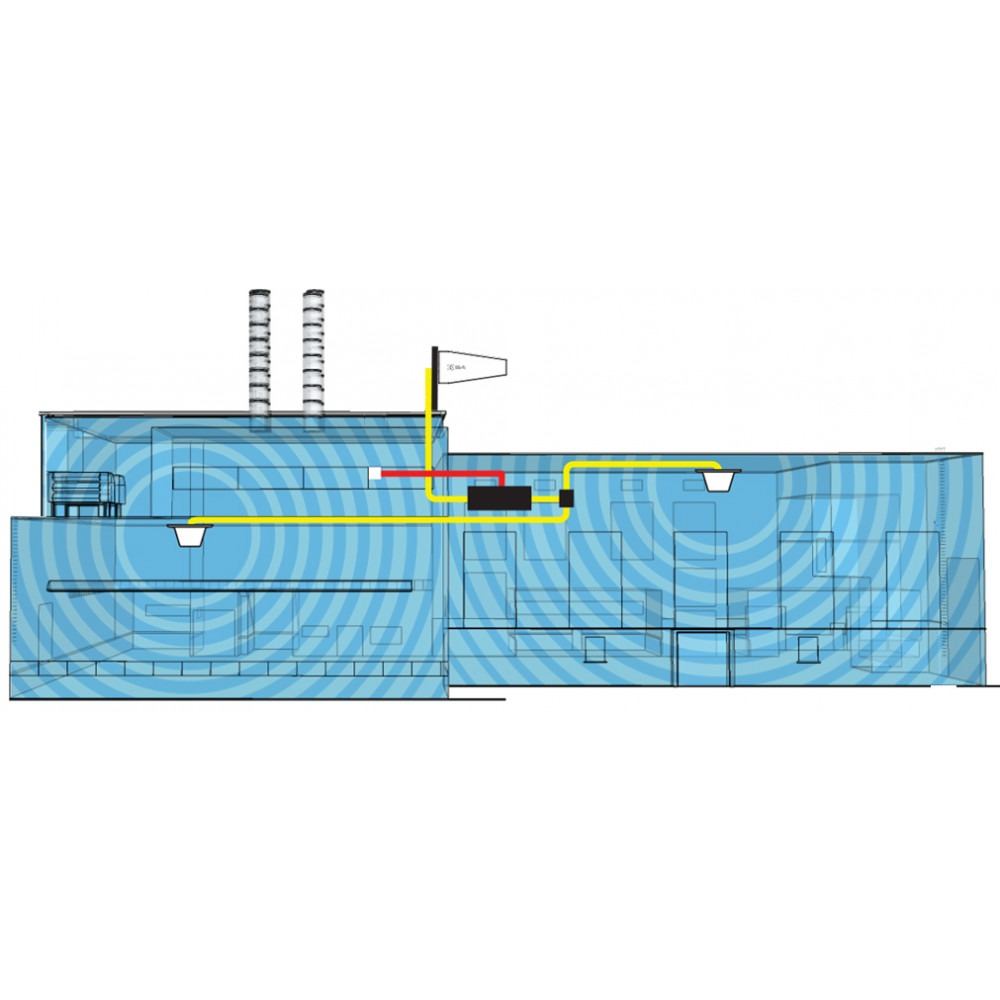
Our Ofcom-exempt repeaters take the mobile signal from outside the building and distribute it inside to exactly where it's needed. This solution is perfect for small to medium-sized buildings that require 1 to 4 mobile networks. Our highly skilled engineering team has a wealth of experience and knowledge with in-building antenna systems on a range of wireless technologies.

Active DAS Systems
Active Distributed Antenna Systems (DAS) are perfect for large buildings or high footfall areas such as stadiums or shopping centers. These systems allow existing infrastructure such as ethernet or fiber to carry the cellular signals where they need to be. Multiple Network Operators (EE, Vodafone, O2 & Three) can share the same infrastructure, reducing equipment costs. This solution is highly scalable and has no limits on floors or areas that can be covered.
We work with a host of professional manufacturers to provide you the best performing communications system.


In-Building Coverage — Common Questions
A distributed antenna system carries mobile signal deliberately into every part of a building through cabling and antennas sited where coverage is needed. A signal booster or repeater simply amplifies whatever signal reaches one point. A booster can fix a single weak room; a DAS is what delivers consistent coverage across floors, basements, lift cores and stairwells in a structure that blocks signal by design.
With an off-air repeater feeding a distributed antenna system. A donor antenna on the roof picks up the networks outside, the repeater amplifies them, and a passive or active DAS carries that signal through the building to antennas in the lift shafts, basements, stairwells and cores that block it. OLAS designs, installs and supports these systems across the UK.
A repeater that takes its signal from the mobile networks over the air, through a donor antenna placed where the outdoor signal is good, and re-radiates it inside the building through a DAS. It needs no connection from the operator, which keeps it quick to deploy, and it must meet Ofcom's requirements so it does not interfere with the network outside.
Yes. The minimum coverage level is agreed in the contract before installation, and a survey at handover proves it has been met, measured against the same points surveyed at the start.
Modern construction is very good at keeping radio out. Steel frame, reinforced concrete, foil-backed insulation and the metallised coatings on energy-efficient glazing all attenuate cellular frequencies heavily. The network outside can be perfectly strong while the inside of the building is unusable, and no amount of complaining to an operator changes that — the fix has to be inside the structure.
Only certain ones. Ofcom permits static indoor repeaters that meet its licence-exempt technical requirements; devices that do not comply are illegal to use because they can degrade the operator's network for everyone nearby. Anything larger, or serving multiple operators, is designed and coordinated properly rather than bought off a shelf. We handle that as part of the design.
A passive system distributes signal over coaxial cable with splitters and couplers and no amplification in the path — simple and reliable, but limited by cable loss. An active system amplifies within the distribution, usually over fibre, which overcomes that loss and allows even coverage across large floorplates and many floors. Building size, floor count and available cable route decide which is appropriate.
It can, and usually should. A multi-operator design carries EE, O2, Vodafone and Three across the same distribution, so coverage does not depend on which network a visitor happens to use. Single-operator systems are cheaper but leave most of the people in your building no better off.
By surveying it. Our RF engineers measure existing coverage floor by floor and produce heatmaps showing where signal is adequate and where it is not, before any equipment is specified. Coverage is then verified against those same points on commissioning, so the handover is measured evidence rather than an assertion.
Frequently, yes. One correctly specified distribution can carry UHF or TETRA two-way radio alongside cellular services, which avoids installing two separate infrastructures competing for the same containment and ceiling void.
Get connected now.
Talk to one of our specialist team about in-building mobile coverage. Call us, email us, or send a message with the form and we will reply as quickly as possible.